Thursday, 22 November 2007


AMANDA BEARD


Amanda Ray Beard (born October 29, 1981 in Newport Beach, California) is an American Olympic swimmer and model.
Beard made her first Olympic appearance at the
1996 games at the age of 14. She won silver medals in the 100-meter and 200-meter breaststrokes, and a gold in the medley relay. Her young-teen manner captured the attention of the media, and she was often photographed clutching her teddy bear which joined her on the medal stand. She won a bronze medal in the 200-meter breaststroke at the 2000 Games. Amanda attended the University of Arizona where she captured an individual NCAA National Championship in 2001.
In
2003 she became the world champion and world record holder in the 200m breaststroke. She also made a good showing at the 2004 U.S. Olympic Swim Trials, and she competed in the 2004 Olympic Games, where she won a gold medal in the 200-meter breaststroke, her first individual gold medal. She also won a silver medal in the 200-meter individual medley, and she finished fourth in the 100-meter breaststroke.
Amanda has won eight
United States titles (thrice in both the 200m breaststroke and the 100m breaststroke, plus twice in the 200m individual medley). She was 1st in world ranking of 200m breaststroke in 2003.
Her modeling work through photos in swimwear, including bikinis, have been in the
Sports Illustrated Swimsuit Edition. She is a spokesperson for Defenders of Wildlife, and she enjoys interior decorating. Both of her sisters, Leah and Taryn, are swimmers. Amanda placed eighth in the Toyota Grand Prix of Long Beach Celebrity car race in 2006.
Beard previously dated South African swimmer,
Ryk Neethling and NASCAR Nextel Cup Driver, Carl Edwards. She is currently dating photographer Sacha Brown.
Beard was featured on the cover of the September 2004 issue of
FHM magazine that was titled the "Sexy Olympic special". Alongside Beard were pro volleyball player Logan Tom, pro track stars Amy Acuff and Jenny Adams, and fellow pro swimmer Haley Cope. Amanda was featured on the cover and an inside pictorial for the August 2006 issue of FHM, which also named her the world's sexiest athlete on the cover.[4]
Amanda posed for the July 2007 issue of Playboy. She was featured on the cover and in a nude pictorial.[5] Amanda is currently featured on domain company GoDaddy's promotional material as the "GoDaddy Girl" [6]
BRENDAN HANSEN
Brendan Joseph Hansen (born August 15, 1981 in Havertown, Pennsylvania) is an American swimmer who specializes in the breaststroke. He is 6'0" (183 cm) tall and weighs 189 lb (86 kg).
Despite setting the world record in the 100 and 200 meter breaststroke at the 2004 U.S. Olympic trials, he did not manage to win a gold medal in either event at the
2004 Summer Olympics, as he settled for silver in the 100 and bronze in the 200. He would win a gold in those games for his role in the world-record setting 4 x 100 medley relay. His split on the relay turned out to be one of the fastest in history.
At the
2005 World Aquatics Championships, Hansen won gold in the same three events that he participated in at the 2004 Olympics.
Hansen's well-known for his unique style of breaststroke, which incorporates a kick that is much narrower than the other swimmers, including his biggest rival,
Kosuke Kitajima from Japan, who took gold in both the 100 m and 200 m Breaststroke in 2004 Athens Olympic Games. However, Hansen owns the long course World Records in both events.
At the 2006 ConocoPhillips National Championships, Hansen lowered both his world records in the 100 meter and 200 meter breaststroke to 59.13 in the 100 m and 2:08.74 in the 200 m.
At the
2006 Pan Pacific Swimming Championships held in Victoria, Canada [1], Hansen again lowered his world record time in the 200 m breaststroke to 2:08.50. It is notable that he was a quarter of a second behind his best time at the 150 m mark, but he came back 0.6 second faster with a 33.38.
Hansen has set numerous NCAA records while swimming for the
University of Texas at Austin. He graduated in 2005 with a degree in kinesiology

Monday, 19 November 2007

MICHAEL PHELPS

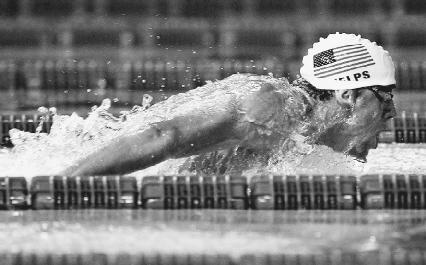
Young American swimmer Michael Phelps has broken several world records in his sport. Even his record breaking has broken new records: he was the first swimmer ever to shatter two world records in individual events during a single day, and was the first to swim five new fastest times at a world championship meet. Phelps, whose best stroke is the butterfly, is said to possess the perfect build for competitive swimming. He stands more than six-foot four inches in height, and his wingspan, as it is called, is even longer: from finger to finger he measures six-foot seven inches across. These attributes have given him an edge in the highly competitive sport, but those who know him say that it is his inner drive, focus on achieving goals, and likeable personality that make him a winner.

Phelps was born on June 30, 1985, and grew up in the Baltimore suburb of Towson. His mother, Debbie, is an administrator with the Baltimore County school system. He has two older sisters, and began swimming when they joined a local swim team. "At first, I was a little scared to put my head underwater, so I started with the backstroke," Phelps told Frank Litsky, a sportswriter for the New York Times, adding, "I was still scared because I don't think I had goggles."

Phelps's parents quickly recognized their son's talent. When he was eleven years old, they brought him to a top swim coach, Bob Bowman (c. 1964–). After watching him swim, Bowman agreed to take over his training at a Baltimore-area swim club. Bowman predicted that Phelps would be Olympic-caliber material by the time he was fifteen, and might look forward to going to the 2000 Summer Games in Sydney, Australia. Phelps was thrilled by the idea, especially since one of his sisters had qualified for the U.S. women's swim team at the 1996 Summer Games but was sidelined by an injury.

When Bowman told Phelps that he had Olympic potential, the twelve-year-old gave up his other sports, which were soccer, lacrosse, and baseball, in order to bring all his energy to daily pool practice. He began winning every competitive event he entered. The first time he lost, however, he was so upset that he threw down his goggles. Bowman warned him about his unsportsmanlike conduct, and since then Phelps has taken his handful of setbacks in stride.

"It's when your body is not in the best situation, your mind is not in the best situation and things are against you those are the times that really count and really matter you overcome and rise to the occasion."

Those setbacks included his first-ever U.S. national championships, in the summer of 1999. He finished in last place in the 200-meter butterfly. He bounced back at the 2000 U.S. spring nationals to take a third place finish, and then became a surprise qualifier for the Sydney Olympics later that year. When he arrived with the rest of the U.S. swim team, he was the youngest American male swimmer to enter an Olympic contest since 1932. He had qualified for just one event, the 200-meter butterfly, and finished in fifth place.

At the 1972 Summer Olympic Games in Munich, Germany, a young California athlete by the name of Mark Spitz became an international celebrity and Olympic legend. Brash, confident, and phenomenally fast, Spitz beat out the other world-caliber swimmers to win seven gold medals in the sport. No other athlete has ever attained such a feat during a single Olympics.

Born in 1950, Spitz was a talented swimmer in his teens, much like Michael Phelps. Before he competed in the 1968 Summer Olympic Games in Mexico City, Spitz predicted he would win six gold medals, but went home with just two. His confidence was viewed by some as arrogant and unsportsmanlike, and he said little after returning to an intense training schedule for the 1972 Olympics.

But Spitz became the star of the Munich Summer Games. He won his first gold medal in the 200-meter butterfly, setting a world record. He went on to enter six other events, and set world records in each of them. In just eight days he set seven world records and won seven gold medals, including one for the 100-meter freestyle, which was considered his weakest stroke. No other Olympic athlete has ever accomplished such a feat, in either Winter or Summer events.

During the second week of the Games, a group of hooded men associated with an Arab political organization took several Israeli athletes hostage in the Olympic Village. They demanded that Israel release Palestinian prisoners in return. The standoff ended tragically with a botched rescue attempt. The nine Israeli men died, as did several of the hostage takers. Spitz was forced to leave Munich earlier than planned because of the crisis—he was Jewish, and Olympic officials were worried about his safety.

Spitz enjoyed lucrative endorsement contracts after his Munich performance. His dark good looks and mustache made him an early 1970s heartthrob, and he was one of the first Olympic athletes to earn a small fortune from such contracts.

MICHAEL PHELPS

Young American swimmer Michael Phelps has broken several world records in his sport. Even his record breaking has broken new records: he was the first swimmer ever to shatter two world records in individual events during a single day, and was the first to swim five new fastest times at a world championship meet. Phelps, whose best stroke is the butterfly, is said to possess the perfect build for competitive swimming. He stands more than six-foot four inches in height, and his wingspan, as it is called, is even longer: from finger to finger he measures six-foot seven inches across. These attributes have given him an edge in the highly competitive sport, but those who know him say that it is his inner drive, focus on achieving goals, and likeable personality that make him a winner.

Phelps was born on June 30, 1985, and grew up in the Baltimore suburb of Towson. His mother, Debbie, is an administrator with the Baltimore County school system. He has two older sisters, and began swimming when they joined a local swim team. "At first, I was a little scared to put my head underwater, so I started with the backstroke," Phelps told Frank Litsky, a sportswriter for the New York Times, adding, "I was still scared because I don't think I had goggles."

Phelps's parents quickly recognized their son's talent. When he was eleven years old, they brought him to a top swim coach, Bob Bowman (c. 1964–). After watching him swim, Bowman agreed to take over his training at a Baltimore-area swim club. Bowman predicted that Phelps would be Olympic-caliber material by the time he was fifteen, and might look forward to going to the 2000 Summer Games in Sydney, Australia. Phelps was thrilled by the idea, especially since one of his sisters had qualified for the U.S. women's swim team at the 1996 Summer Games but was sidelined by an injury.

When Bowman told Phelps that he had Olympic potential, the twelve-year-old gave up his other sports, which were soccer, lacrosse, and baseball, in order to bring all his energy to daily pool practice. He began winning every competitive event he entered. The first time he lost, however, he was so upset that he threw down his goggles. Bowman warned him about his unsportsmanlike conduct, and since then Phelps has taken his handful of setbacks in stride.

"It's when your body is not in the best situation, your mind is not in the best situation and things are against you those are the times that really count and really matter you overcome and rise to the occasion."

Those setbacks included his first-ever U.S. national championships, in the summer of 1999. He finished in last place in the 200-meter butterfly. He bounced back at the 2000 U.S. spring nationals to take a third place finish, and then became a surprise qualifier for the Sydney Olympics later that year. When he arrived with the rest of the U.S. swim team, he was the youngest American male swimmer to enter an Olympic contest since 1932. He had qualified for just one event, the 200-meter butterfly, and finished in fifth place.

At the 1972 Summer Olympic Games in Munich, Germany, a young California athlete by the name of Mark Spitz became an international celebrity and Olympic legend. Brash, confident, and phenomenally fast, Spitz beat out the other world-caliber swimmers to win seven gold medals in the sport. No other athlete has ever attained such a feat during a single Olympics.

Born in 1950, Spitz was a talented swimmer in his teens, much like Michael Phelps. Before he competed in the 1968 Summer Olympic Games in Mexico City, Spitz predicted he would win six gold medals, but went home with just two. His confidence was viewed by some as arrogant and unsportsmanlike, and he said little after returning to an intense training schedule for the 1972 Olympics.

But Spitz became the star of the Munich Summer Games. He won his first gold medal in the 200-meter butterfly, setting a world record. He went on to enter six other events, and set world records in each of them. In just eight days he set seven world records and won seven gold medals, including one for the 100-meter freestyle, which was considered his weakest stroke. No other Olympic athlete has ever accomplished such a feat, in either Winter or Summer events.

During the second week of the Games, a group of hooded men associated with an Arab political organization took several Israeli athletes hostage in the Olympic Village. They demanded that Israel release Palestinian prisoners in return. The standoff ended tragically with a botched rescue attempt. The nine Israeli men died, as did several of the hostage takers. Spitz was forced to leave Munich earlier than planned because of the crisis—he was Jewish, and Olympic officials were worried about his safety.

Spitz enjoyed lucrative endorsement contracts after his Munich performance. His dark good looks and mustache made him an early 1970s heartthrob, and he was one of the first Olympic athletes to earn a small fortune from such contracts.

Thursday, 15 November 2007


FRANK KUCHTA


Frank Kuchta grew up in Chicago, Illinois where he attended St. Laurence H. S. He continued his education at George Williams College where he participated in Swimming and Water Polo. He later earned a Master’s Degree in Administration from Governors State University. He started teaching in 1980 and has been at Hinsdale South High School since 1985. Currently, he teaches Freshman Physical Education and is the Director of Aquatics. Frank is the Head Coach for Girls Swimming, Boys Swimming and Girls Water Polo.

DANA VOLLMER


February, 2005 - Texas Public High School State 5-A Swimming and Diving Championships In her first (and last) high school state swim meet, Dana swam the 200 Free, 100 Fly, and led off the 200 Free Relay for the Granbury High School Lady Pirates. The meet was held at the Lee & Joe Jamail Texas Swim Center at the University of Texas in Austin. February 25-26, 2005

swimmingbilbao